LinkedIn Ads Trick: How I Increased Lead Efficiency by 300%

LinkedIn isn't just the go-to platform for recruitment and professional networking—it's a treasure trove for digital advertisers.
However, advertising on LinkedIn comes with its own set of challenges. To effectively navigate through the platform, one must balance audience targeting, creative development, messaging, and more to deliver campaign excellence.
This article is the first in a series for Optimizing LinkedIn Ads. I'd like to share my LinkedIn learnings after managing paid advertising with 15+ organizations on the platform, including tens of thousands of leads, and nearly $5MM spent.
Common LinkedIn Ads Failures:
Expensive
When comparing LinkedIn Ads to other digital advertising platforms, one can't help but notice the price tag. The higher cost-per-click on LinkedIn is often attributed to its niche audience of professionals and the potential high-value leads it promises.
This means advertisers have a smaller margin for error. Each click comes at a premium, and thus, it's crucial for marketers to ensure that every interaction on this platform brings value. The idea isn't just about minimizing wastage; it's about maximizing returns.
It's not sufficient for a user to merely click on your ad; the subsequent interactions, be it signing up, exploring your service, or making a purchase, need to be of substance to justify the higher spend.
Settings That Hurt the Advertiser
LinkedIn Ads, out of the box, aren't designed with the advertiser's best interest in mind. The default settings are aimed to fit a wide variety of users and not tailored to the specific needs of the marketer.
For instance, automatic bidding, broad audience definitions, or a lack of placement limitations can quickly deplete your advertising budget without offering a decent return on investment.
This means that advertisers must become acquainted with the platform's intricacies and be prepared to customize settings extensively. Neglecting this could result in speedy budget exhaustion without any meaningful engagement or lead generation.
Messaging Alignment
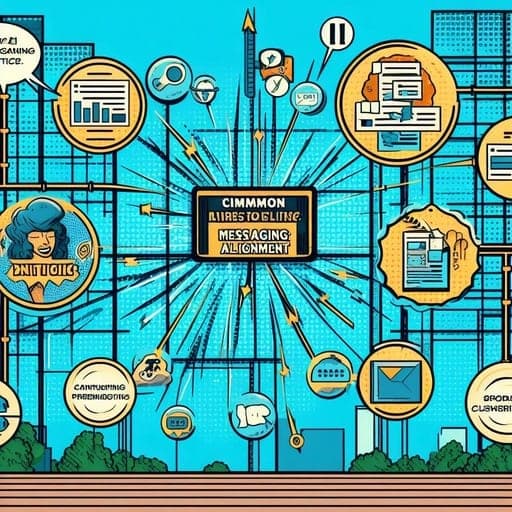
Every platform has its own audience culture, and LinkedIn is no exception. It's a hub of professionals seeking meaningful content, networking opportunities, or solutions that cater to their professional needs. This brings us to the pivotal point: alignment. There are three pillars to this:
- Product: What you're offering should address the needs of the LinkedIn demographic. It could be a B2B service, a productivity tool, a professional course, or anything that aligns with the professional theme of the platform.
- Message: The way you present your offering on LinkedIn needs precision. It's not just about flashy graphics or catchy slogans. The content should resonate, providing value or solving a problem for the user. Whether it's an insightful article, a solution to a common industry problem, or a unique proposition, it needs to be communicated effectively.
- Customer: Not everyone on LinkedIn is your target. The platform boasts a wide array of professionals, from CEOs to interns, spanning countless industries. Your campaign should be laser-focused on the segment that aligns with your offering. Otherwise, you'll be broadcasting to a vast audience with only a fraction genuinely interested in your proposition.
In essence, a misalignment in any of these three components can spell disaster for your campaign. The stakes are higher on LinkedIn, given the costs, making it essential for advertisers to ensure that their product, message, and target audience are in perfect harmony. Only then can one unlock the platform's true potential and witness a commendable return on investment.
How I Increased LinkedIn Campaign Performance: Audience Segmentation

- Do you know your audience?
- The first step towards any successful campaign is understanding whom you're speaking to. What are their pain points, interests, and aspirations? - Do you know your exclusions?
- Knowing whom to exclude is equally critical. It saves you from wasting ad spend on audiences who aren't relevant or have already been engaged. - Is that data available in your CRM?
- Any strategy is only as good as the data that fuels it. Ensure that your CRM or database is updated and cleansed regularly.
The stakes are higher on LinkedIn for marketing teams, but success can bring millions in new revenue.
Leveraging CRM for Superior LinkedIn Campaigns
A CRM (Customer Relationship Management) system isn't just a tool to manage customer data—it's the backbone of any modern digital marketing campaign.
Its efficiency, however, is determined by CRM's accuracy and how well it's integrated with other tools, including LinkedIn Ads.
Why a Reliable CRM Process is Essential:
- Data Integrity: The adage 'Garbage in, garbage out' has never been more relevant. Your CRM data should be clean, focused, and trustworthy. Dirty or inaccurate data will not only waste your advertising budget but can severely limit the potential of your LinkedIn campaigns.
- Automation and Continual Data Sharing: Not having on-demand data can bottleneck your campaigns. This is why integrating a robust CRM process that automates data and ensures continuous sharing with platforms like LinkedIn is non-negotiable. It empowers advertisers to create campaigns that are always up-to-date with their latest audience information.
Audiences to Prioritize for B2B SaaS Campaigns
- Customers
- Churned
- Open Deals
- Lost Deals
- SQLs based on Last Sales Interaction:
- 0-3 months
- 4-6 months
- 6-9 months
- 9-12 months
- 12+ months
- MQLs based on Last Marketing Interaction:
- 0-3 months
- 4-6 months
- 6-9 months
- 9-12 months
- 12+ months
- Target Companies
- Leads and MQLs
- Exclusions:
- Non-Relevant CRM Companies
- Custom List from LinkedIn Performance Data
- Non-Target Demographics Within LinkedIn
Turning Up the Heat With Lead Efficiency
The data below is accurate but company details, exact audience targeting, and outcomes will remain anonymous. Please reach out to me directly and I will share verification and referral if requested.
Let's get to the results, you've seen the strategy but let's put it into practice.
Campaign Targeting:
| Qualifiers | Campaign Alpha | Campaign Beta |
|---|---|---|
| Revenue: | $10MM - 1B+ | $10MM - 1B+ |
| Company Size: | 200+ Employees | 200+ Employees |
| Industry: | Subsector in Manufacturing | Subsector in Manufacturing |
| Job Function: | Definited Target | Definited Target |
| Experience: | 8+ Years | 8+ Years |
| Job Seniority: | Managers+ | Managers+ |
| Known Lead/MQL Companies: | X | |
| Target Companies: | X | |
| SQL Companies W/ Last Interation 12+ Months Ago: | X |
Campaign Exclusions:
| Campaign Exclusions | Campaign Alpha | Campaign Beta |
|---|---|---|
| Revenue: | $1-10MM | $1-10MM |
| Company Size: | 1-200 | 1-200 |
| Industry: | Non-Relevant Industries | Non-Relevant Industries |
| Job Function: | Non-Relevant Functions | Non-Relevant Functions |
| Experience: | 1-7 Years | 1-7 Years |
| Job Seniority: | Interns-Senior Specialists | Interns-Senior Specialists |
| Customer Companies: | X | |
| Deal Open or Lost Companies: | X | |
| Curated Exclusion List: | X | |
| SQL Companies W/ Last Interation 1-12 Months Ago: | X |
Campaign Results:
| KPIs | Campaign Alpha | Campaign Beta |
|---|---|---|
| Spend: | $18,529.50 | $21,643.64 |
| Leads: | 117 | 142 |
| Cost Per Lead: | $158.37 | $152.42 |
| New SQLs: | 23 | 97 |
| Cost Per SQL: | $805.63 | $223.13 |
| New SQL Rate: | 19.6% | 68.3% |
A quick glance at the data between Campaign Alpha and Campaign Beta presents a clear picture. While Campaign Beta showcased a stark improvement in efficiency and targeting, even with a higher budget.
Quality of Leads: Not only did Campaign Beta manage to reduce the costs, but it also improved the quality of leads. The New SQL Rate saw an immense jump from 19.6% in Campaign Alpha to 68.3% in Campaign Beta.
Cost Efficiency: One of the major indicators of a successful campaign is the cost efficiency. In Campaign Beta, the cost per lead decreased by $5.95, and even more impressively, the cost per SQL fell by a staggering $582.50.
The results of Campaign Beta reflect the potential of a meticulously segmented and targeted approach. Leveraging the capabilities of HubSpot's automated audience features, Campaign Beta reached the precision audience required.
By understanding your audience, aligning your message, and leveraging the power of a reliable CRM, advertisers can dramatically increase lead efficiency and ROI, as showcased by our success with Campaign Beta.
If you're looking to unlock the true potential of your LinkedIn ad campaigns, don't hesitate. Harness the power of precision targeting and transform your advertising approach.